Written by Sandy Fahmy, REALTOR® | CNE® | ABR® | SRS® | RENE® | RSPS® | RESA®
Thinking about investing in Ontario real estate in 2025? With new flipping taxes, stricter Airbnb regulations, Hamilton’s Vacant Unit Tax, and advanced financing programs like CMHC MLI Select, the rules have changed — and understanding them can mean the difference between profit and pitfalls. This guide breaks it all down so you can invest smarter, not harder.Ontario’s real estate market is evolving rapidly. With new flipping taxes, Airbnb restrictions, and Hamilton’s Vacant Unit Tax, investors must stay informed. Here’s what you need to know to make smart moves in 2025.
Step 1: Identify Your Investment Goals
Before diving into listings, define your strategy. Do you want:- Steady monthly cash flow (buy & hold)
- Quick profits (house flipping)
- Short-term rental income (Airbnb/VRBO)
- Reduced mortgage costs while living on-site (house hacking)
Buy & Hold
- Great for long-term income and property appreciation
- Ontario rent control updates (2025):
- 2.5% cap only for units first occupied before Nov 15, 2018
- Units occupied after Nov 15, 2018 are not rent-controlled
House Flipping
- Short-term gains are taxed differently now:
- Selling within 12 months = business income, taxed at your full income rate
- Exemptions exist for job relocation, divorce, or death
Short-Term Rentals
- Most Ontario cities (Toronto, Ottawa, Mississauga, Hamilton) require registration
- Only your principal residence can usually be listed
- Fines up to $100,000 for violations
- Hamilton investors: 4% Municipal Accommodation Tax (MAT) applies
House Hacking
- Live in one unit, rent out the others
- Owner-occupied financing can make multi-unit purchases more accessible
Step 2: Assess Your Finances
Expect stricter mortgage rules than for a primary residence:- Down payment: 20%+ (higher for multi-units)
- Good credit score & income verification required
- Cash reserves for:
- Closing costs (1.5–4%)
- Repairs/renovations
- Insurance and property management
Hamilton’s Vacant Unit Tax (VUT)
- Applies to properties vacant more than 183 days/year
- 1% tax on assessed value
- File an annual occupancy declaration to avoid penalties
Step 3: Find the Right Market
Key indicators of a strong investment market:- Job growth and economic stability
- Population growth from immigration or local industry
- Low rental vacancy rates
Spotlight: Hamilton, Ontario
- Rising rental demand + GTA proximity
- Watch for:
- 1% Vacant Unit Tax (2025)
- 4% MAT on short-term rentals
- Zoning updates restricting multi-unit or Airbnb conversions
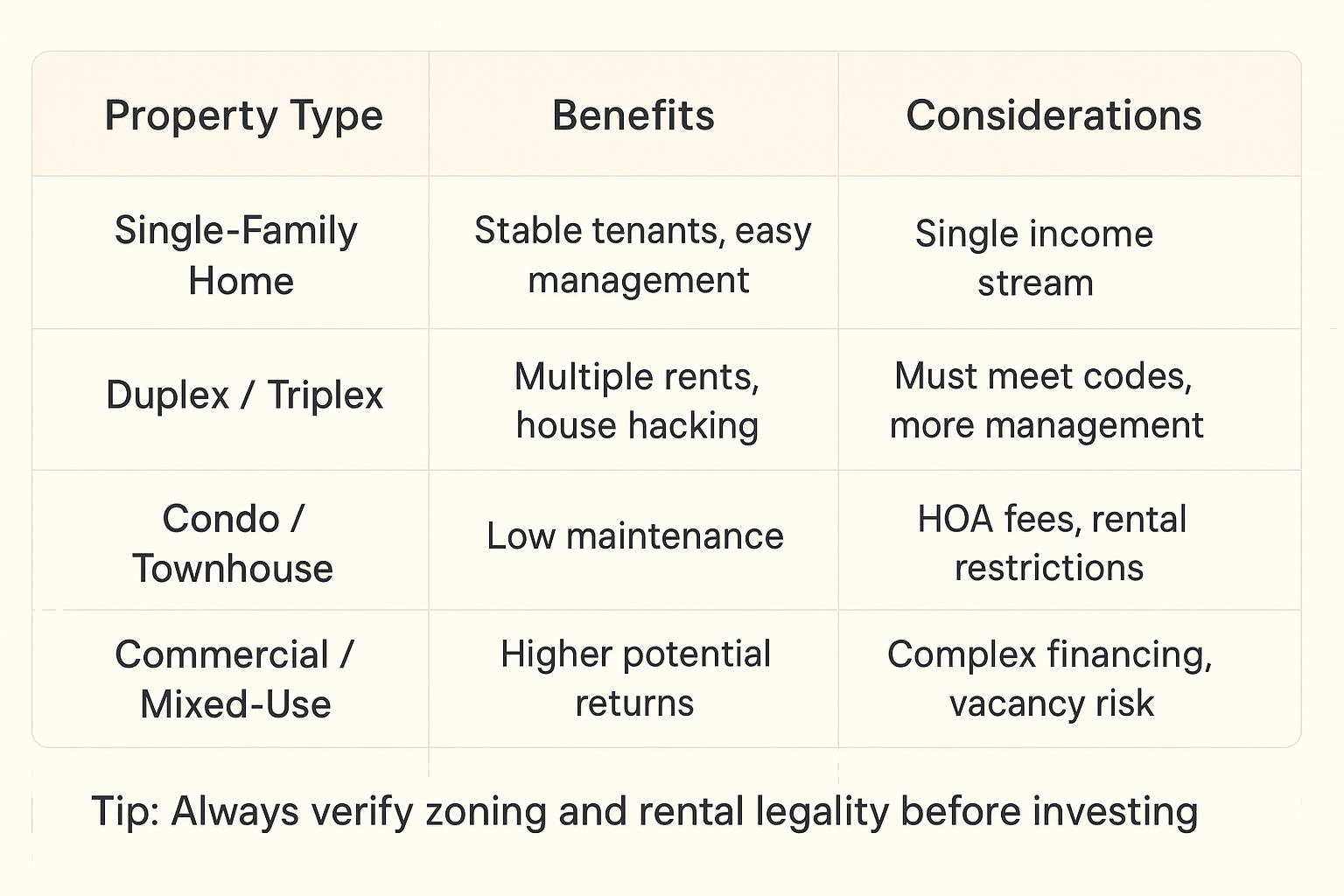
Step 4: Choose the Right Property Type
Step 5: Run the Numbers
Key metrics for investment success:- Cash Flow: Rent – (Mortgage + Taxes + Insurance + Maintenance + Vacancy)
- Net Operating Income (NOI): Income – Operating Expenses
- Cap Rate: NOI ÷ Purchase Price
- Cash-on-Cash Return: Annual Cash Flow ÷ Total Cash Invested
- Property management (8–10% of rent)
- Property taxes
- Hamilton Vacant Unit Tax (1%)
- Short-term rental taxes (4% MAT + HST)
- Landlord insurance
Step 6: Build Your Real Estate Team
Your team makes or breaks your success:- Realtor: Investment-focused, understands returns
- Mortgage Broker: Creative financing solutions
- Lawyer: Reviews contracts, zoning, and tax compliance
- Accountant: Maximizes deductions, ensures CRA compliance
- Property Manager: Handles day-to-day operations and tenant issues
Step 7: Make an Offer & Close the Deal
Steps to finalize your investment:- Include inspection and financing conditions
- Verify rental legality and occupancy declarations
- Check Vacant Unit Tax status (Hamilton)
- Lawyer handles closing, title search, and filings
Step 8: Manage Your Property
Owning property is ongoing work. Key tasks:- Follow Residential Tenancies Act (RTA) rules
- File Hamilton VUT declaration annually
- Collect and remit MAT for short-term rentals
- Track finances carefully or hire a property manager
Bonus Strategy: CMHC MLI Select Program
For investors ready to scale beyond single-family homes, the CMHC MLI Select program offers unique financing advantages for multi-unit rental properties (5+ units) across Canada, including Ontario. Qualifying projects may access:- Up to 95% loan-to-value financing
- Extended amortization periods (up to 50 years)
- Lower mortgage-insurance rates for projects meeting targets in affordability, energy efficiency, or accessibility
Thinking About Other Investment Opportunities?
Alberta
If you’re considering opportunities outside Ontario, Alberta offers attractive options:- Cities like Calgary, Edmonton, and Red Deer have lower entry prices than the GTA/Hamilton
- Strong rental yields due to affordable home prices
- Growing industries: energy, tech, logistics
- Less restrictive short-term rental rules
International Markets
I’m also connected to a network of RE/MAX agents worldwide for clients interested in global real estate. From vacation homes to rental properties, I can help you navigate international markets with confidence. Let’s talk — whether you’re interested in Ontario, Alberta, or international investment opportunities, I can help you find the right strategy for your goals.About Me
Sandy Fahmy, REALTOR® | CNE | ABR | SRS | RENE® | RSPS | RESACertified Negotiation Expert • Accredited Buyer’s Representative • Seller Representative Specialist • Real Estate Negotiation Expert • Resort & Second-Home Property Specialist • Real Estate Staging Association
With a deep understanding of Ontario’s real estate market and the latest investment regulations, Sandy helps clients make informed decisions when buying or selling property. Sandy combines expertise with practical insight to guide investors and homeowners through complex transactions with confidence.